Pool Cage Cleaning in Odessa Florida
Revive the Clarity of Your Odessa Pool Enclosure
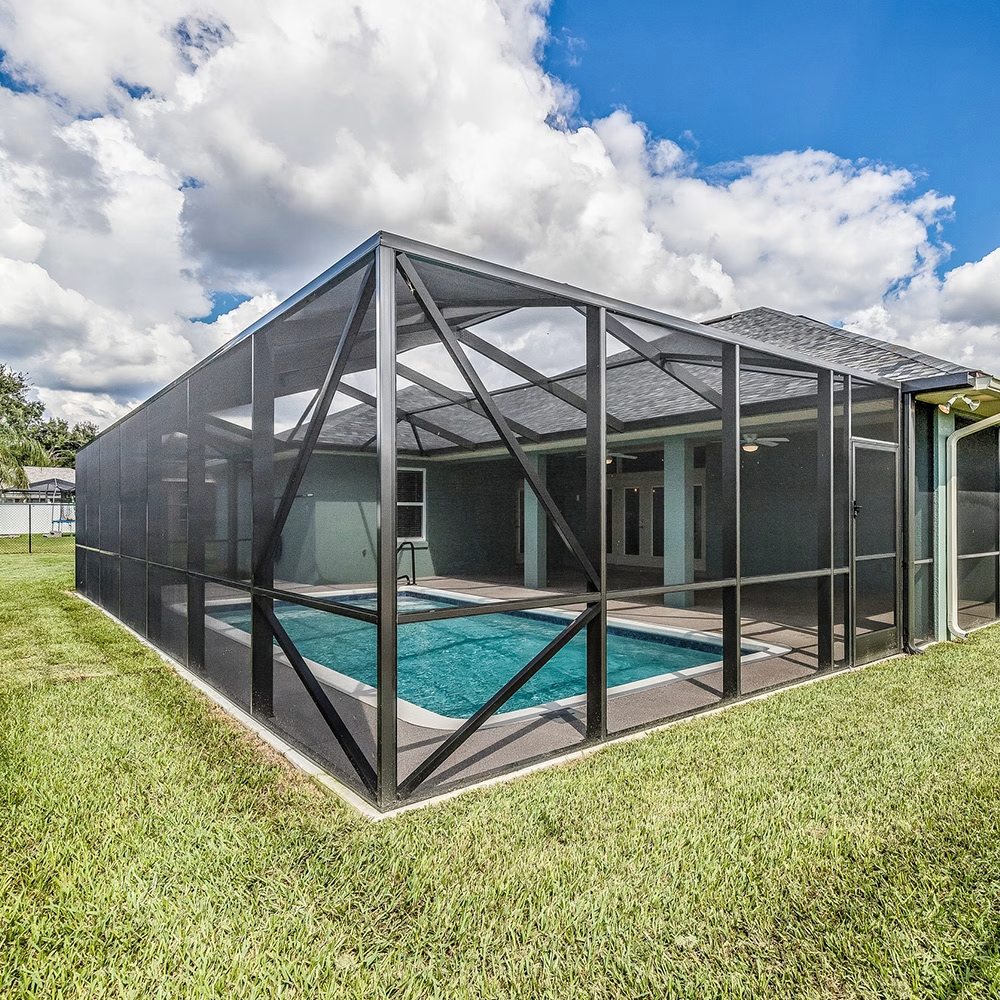
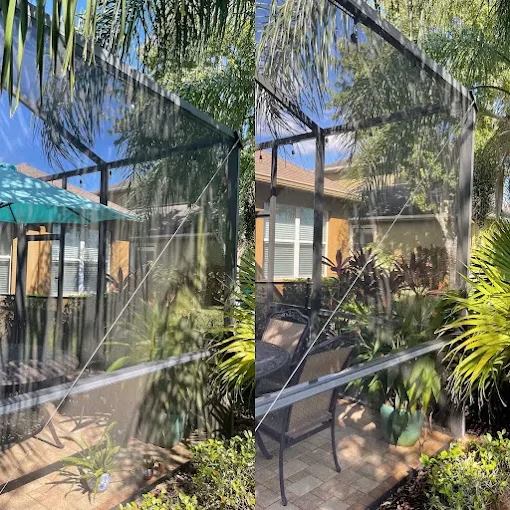
Odessa is known for its wide-open properties, horse farms, and generous tree cover — a setting that creates some of the heaviest pollen and organic debris loads in Hillsborough County. Pool enclosures here sit under constant bombardment from oak and pine trees, and the combination of shade and humidity makes it easy for algae and mildew to take hold. Within a single season, screens can turn dark and dingy while frames collect a chalky white film.
Softwash Knights restores pool cages throughout Odessa with a pool cage cleaning service built entirely around low-pressure soft washing. Our process safely removes algae, mildew, pollen, and aluminum oxidation from screens and frames without ever risking structural damage.
Why Pressure Washing Has No Place Near Screened Enclosures
Before anything else, understand this: pressure washing will destroy your pool cage.
Standard residential pressure washers deliver 1,500 to 3,000 PSI. Screen mesh is engineered for wind, rain, and insects — not a concentrated water jet. Aiming one at screen panels will:
-
Puncture the mesh — A single pass can rip a hole through the screen
-
Stretch the weave permanently — Screens lose tension and sag in ways that never recover
-
Blow the spline out of its channel — The rubber cord holding the screen in place pops loose, causing panels to bag
-
Scar the aluminum frame — High pressure pits metal and strips away protective finishes
Re-screening an entire cage costs several times more than cleaning it. That’s why trained technicians always rely on soft washing — low pressure, high chemistry, and zero damage.
What Soft Washing Does Differently
Soft washing isn’t just pressure washing at a lower setting. It’s a completely different method built on four principles:
-
Minimal pressure — Under 40 PSI for screens, up to 100 PSI for frames
-
Professional cleaning solutions — Biodegradable formulas that kill mold, mildew, and algae at the cellular level
-
Dwell time — The solution sits on the surface long enough to dissolve organic growth
-
Careful rinsing — Low-pressure water washes away dead organisms without stressing the mesh
Because soft washing eliminates the organisms causing the staining rather than just scrubbing them off, the results hold up noticeably longer than pressure washing.
Your Enclosure Shares Space With the Rest of Your Yard
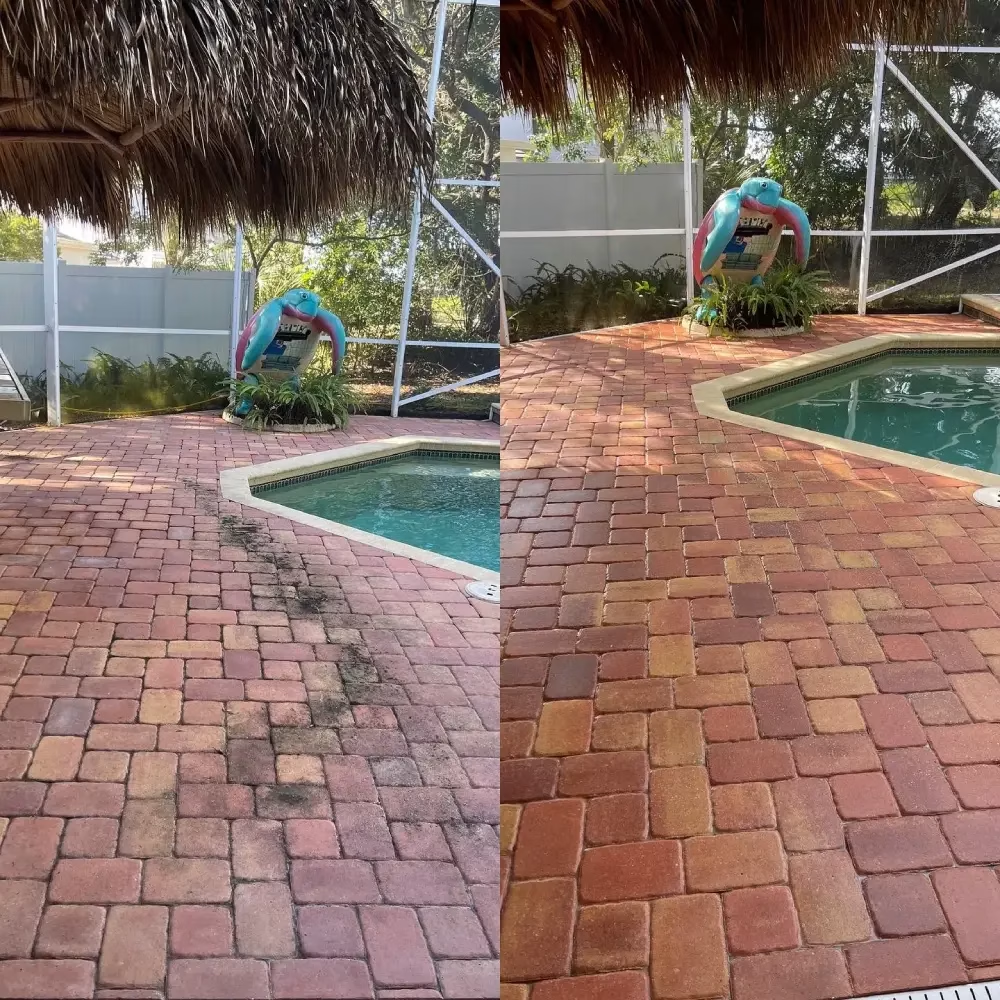
A pool cage doesn’t exist in isolation. The lanai, pool deck, patio, sliding doors, pavers, and nearby fencing all collect the same pollen, humidity, and organic debris that build up on the screens. If your pool deck pavers have lost their joint sand or water repellency, paver sanding and sealing can restore them. For decks with deeper fading or staining, paver restoration may be the better solution.
Softwash Knights can clean your cage alongside the surrounding surfaces so the entire area looks refreshed together. This is especially useful for homes with paver decks, travertine, natural stone, or concrete surrounds. In communities like Angeline, Del Webb Bexley, Connerton, Wilderness Lake Preserve, Epperson, Mirada, Estancia, Starkey Ranch, Bexley, Champions’ Club, Fox Wood, Wyndtree, Lansbrook, Gulfwinds, Key Vista, and Serengeti, pool areas are among the most-used parts of the home.
What’s Actually Growing on Screens and Frames
Green, black, and chalky-white buildup aren’t the same problem. Each requires its own approach.
Algae and Mildew on Screens
The green fuzz and black streaks on screen panels are mold and algae, both feeding on moisture rising from the pool. Shaded enclosures grow it faster because they stay wet longer — and Odessa’s tree canopy provides plenty of shade.
Pollen Film
Every spring, Tampa Bay’s oak and pine trees release pollen that coats screens with a yellow-tan film. That film traps moisture and accelerates mold growth. Screens that looked clean in January can be green by May because of pollen.
Oxidation on Aluminum Frames
The chalky white or yellow film on aluminum framing is oxidation — not mold. It forms from UV exposure, salt air, and pool chemical vapors. It cannot be removed by rinsing or pressure alone and requires a specific aluminum treatment solution.
Tiger Stripes on Cage Gutters
Vertical black streaks on the cage gutters are mold and algae feeding on roof runoff. They need targeted treatment because the organic material keeps feeding the growth. If your roof shows similar streaking, roof cleaning may be needed as well.
Our Pool Cage Cleaning Process
Professional pool cage cleaning involves several steps, each targeting a different part of the enclosure.
Step 1: Protection and Preparation
Before any cleaning begins, we protect your pool and surrounding landscaping. Pool skimmers and equipment are covered, rinse water is directed away from the pool, and plants are pre-wetted to prevent damage from cleaning solutions.
Step 2: Screen Cleaning
A biodegradable cleaning solution is applied to the screen panels at low pressure. The solution breaks down algae and mildew at the root. After allowing proper dwell time, we rinse the screens at low pressure, carrying away dead growth and residue without stressing the mesh.
Step 3: Aluminum Frame Treatment
The frame gets different treatment. We apply a specific aluminum oxidation solution that removes the chalky buildup that pressure alone cannot touch. This restores the frame to its original brightness.
Step 4: Gutter and Track Cleaning
The gutters and bottom tracks collect debris and hold moisture, feeding more growth. We clear these areas as part of the job.
Step 5: Final Rinse and Inspection
The entire cage — screens and frame — is rinsed at low pressure. We inspect for any areas that need additional attention and ensure no cleaning solution residue remains.
How Often Should You Clean Your Pool Cage in Odessa Florida?
Cleaning frequency depends on your specific location and conditions:
| Your Situation | Recommended Frequency |
|---|---|
| Inland, shaded enclosure | Every 12-18 months |
| Gulf coast / waterfront | Every 9-12 months |
| Near lots of trees (oak, palm) | Every 12 months |
| HOA community | Per HOA schedule (often annual or biannual) |
For homes in Tarpon Springs, Holiday, and other Gulf-adjacent communities, salt air accelerates buildup significantly. Homes within 5 miles of the coast may need cleaning closer to every 9 months.
Signs it’s time to clean:
-
Screens look green or black instead of grey
-
Light through the screens is noticeably reduced
-
The frame has chalky white or yellow discoloration
-
You can see streaking on the aluminum
-
The enclosure looks dingy from inside the pool area
Residential and Commercial Pool Cage Cleaning
Softwash Knights serves both residential and commercial properties in Odessa Florida. For homeowners, we clean pool cages, lanais, birdcages, and screen rooms of all sizes. For commercial properties — including HOAs, apartment complexes, and community pools — we can handle larger enclosures and coordinate around your schedule.
Pool cage cleaning pairs well with other exterior services we offer, including pressure washing for pool decks and driveways, paver sealing for pool deck pavers, paver sanding and sealing for joint stabilization, house washing for exterior walls, window cleaning for clear views, and fence cleaning for pool area fencing. Combining services can help your entire property look consistently maintained.
If your pool deck pavers need more than cleaning — if they’re faded or have structural issues — we also offer paver restoration to bring them back to life.
Local Pool Cage Cleaning Services
Softwash Knights provides pool cage cleaning throughout the Tampa Bay area, including:
- Pool Cage Cleaning in Odessa Florida
- Pool Cage Cleaning in Lutz Florida
- Pool Cage Cleaning in Land O’ Lakes Florida
- Pool Cage Cleaning in Trinity Florida
- Pool Cage Cleaning in Wesley Chapel Florida
- Pool Cage Cleaning in Palm Harbor Florida
- Pool Cage Cleaning in Tarpon Springs Florida
- Pool Cage Cleaning in Holiday Florida
- Pool Cage Cleaning in Spring Hill Florida
- Pool Cage Cleaning in North Tampa Florida
Frequently Asked Questions About Pool Cage Cleaning
Can you pressure wash pool cage screens?
No. Pressure washing should never be used on pool cage screens. High pressure tears the mesh, stretches the weave, and blows out the spline holding the screen in the frame. This is why professional cleaning uses soft washing — low pressure with cleaning solutions that do the work safely.
What's the difference between cleaning the screens and the frame?
Screens need low-pressure cleaning with a solution that kills algae and mildew. The aluminum frame needs a different treatment to remove oxidation — the chalky white or yellow buildup that pressure alone cannot remove. Both are included in our pool cage cleaning service.
How long does pool cage cleaning take?
Most residential pool cages can be cleaned in 2-3 hours, depending on size, height, and level of buildup. Two-story enclosures or heavily soiled cages may take longer. We’ll provide a time estimate when we assess your enclosure.
Will soft washing kill my plants or damage my pool?
We take precautions to protect landscaping and pool water, including pre-wetting plants, covering pool equipment, and directing rinse water away from the pool. The cleaning solutions we use are biodegradable and managed carefully to minimize impact.
Can you remove all the staining from my screens?
In most cases, yes. Soft washing kills the algae and mildew and removes the staining they cause. However, if organic growth has been present for a very long time or the screens are very old, some discoloration may remain. We’ll let you know what to expect during our assessment.