Paver Restoration in Palm Harbor Florida
Bringing Your Pavers Back to Life in Palm Harbor, FL
Palm Harbor’s coastal charm comes with a price for your hardscaping. The same sunshine that draws visitors to the area also takes a toll on your driveway, patio, and pool deck. Within a few short years, what was once a pristine paver surface can turn dull, discolored, and unstable.
Softwash Knights specializes in comprehensive paver revival for Palm Harbor homeowners and businesses. We don’t just clean your pavers — we rebuild their structure from the ground up, addressing color loss, joint deterioration, and surface damage in one complete service. Our paver restoration team treats every surface as part of your property’s bigger picture, which is why many clients pair this service with pressure washing for surrounding concrete and fence cleaning to refresh the entire exterior.
Why Palm Harbor’s Climate Is Tough on Pavers
Living near the Gulf means your pavers face conditions that accelerate wear far faster than in other parts of the country. Here’s what’s happening beneath the surface.
Sun Damage Robs Your Pavers of Color
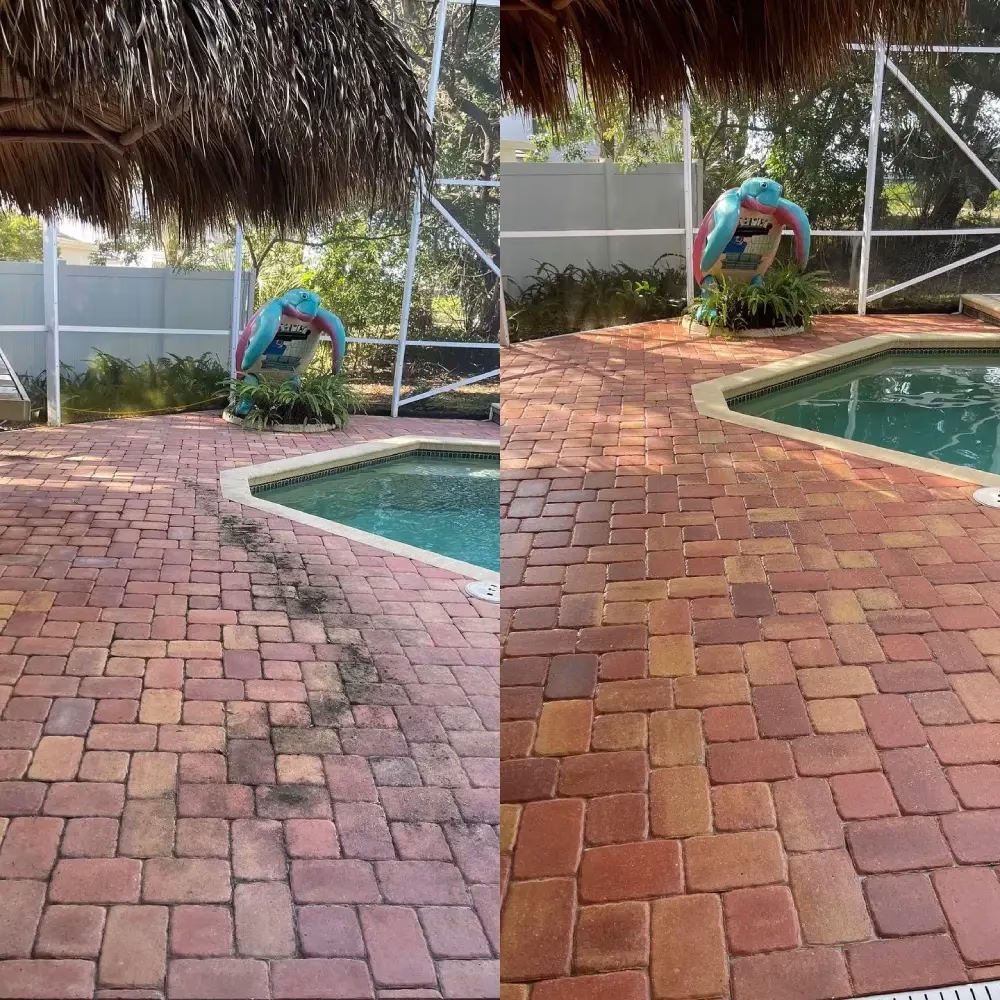
Concrete pavers get their color from iron oxide pigments mixed into the material. When the Florida sun beats down day after day — and Palm Harbor regularly sees extreme UV index readings — those pigments break down at a molecular level. This isn’t surface dirt that can be rinsed away. The color itself is being destroyed by light exposure. This is exactly why paver sealing matters: a quality sealer slows UV degradation and helps hold onto the color you paid for.
Rain Washes Away What Holds Pavers Together
The sand in your paver joints isn’t decorative — it’s structural. It distributes weight, locks each paver in place, and blocks weeds from sprouting between them. With over five feet of rain falling annually in this region, often in violent afternoon storms, that critical joint sand gets washed out little by little. When joints empty out, paver sanding and sealing becomes necessary to refill and lock everything back together.
Moisture Feeds Unwanted Growth
Palm Harbor’s humid air creates ideal conditions for algae, mold, and mildew. These organisms love shady spots where dampness hangs around. Beyond looking bad, they make walking surfaces treacherous and produce acids that eat away at paver material. The same growth appears on siding and roofs, which is why soft washing and roof cleaning are common companion services for local homeowners.
Temperature Swings Put Stress on the Surface
The daily cycle of hot afternoons and cooler evenings causes pavers to swell and shrink repeatedly. This constant movement strains the joints and can cause pavers to shift, rise at the edges, or crack when joints aren’t kept in good shape. Pool decks face an added challenge from splash-out and constant moisture, making pool cage cleaning a smart add-on for anyone restoring deck pavers.
What Paver Restoration Can and Cannot Do
We believe in being honest about results. Restoration can transform many paver problems, but it has limits.
Restoration typically solves:
-
Dull or faded color, especially when using color-enhancing sealers
-
Green and black staining from algae, mold, and mildew
-
Weeds sprouting between pavers
-
Joint sand that has washed away or thinned out
-
Small amounts of shifting or settling
-
Surfaces that no longer repel water
-
Stains from dirt, pollen, and sprinkler minerals
Restoration may not be appropriate when:
-
Large sections of pavers have sunk significantly or heaved upward
-
Most of the surface has loose pavers
-
The underlying base has structural failure
-
Water pools consistently due to grading or drainage problems
-
Pavers are extensively cracked
-
Deep, permanent stains have penetrated the material
When structural issues exist, restoration can provide temporary cosmetic improvement, but the real problem will resurface. In these situations, we’ll tell you honestly what restoration can and cannot accomplish. If the surrounding concrete is also worn, our pressure washing team can assess those surfaces during the same visit.
How Long Will Your Restored Pavers Last?
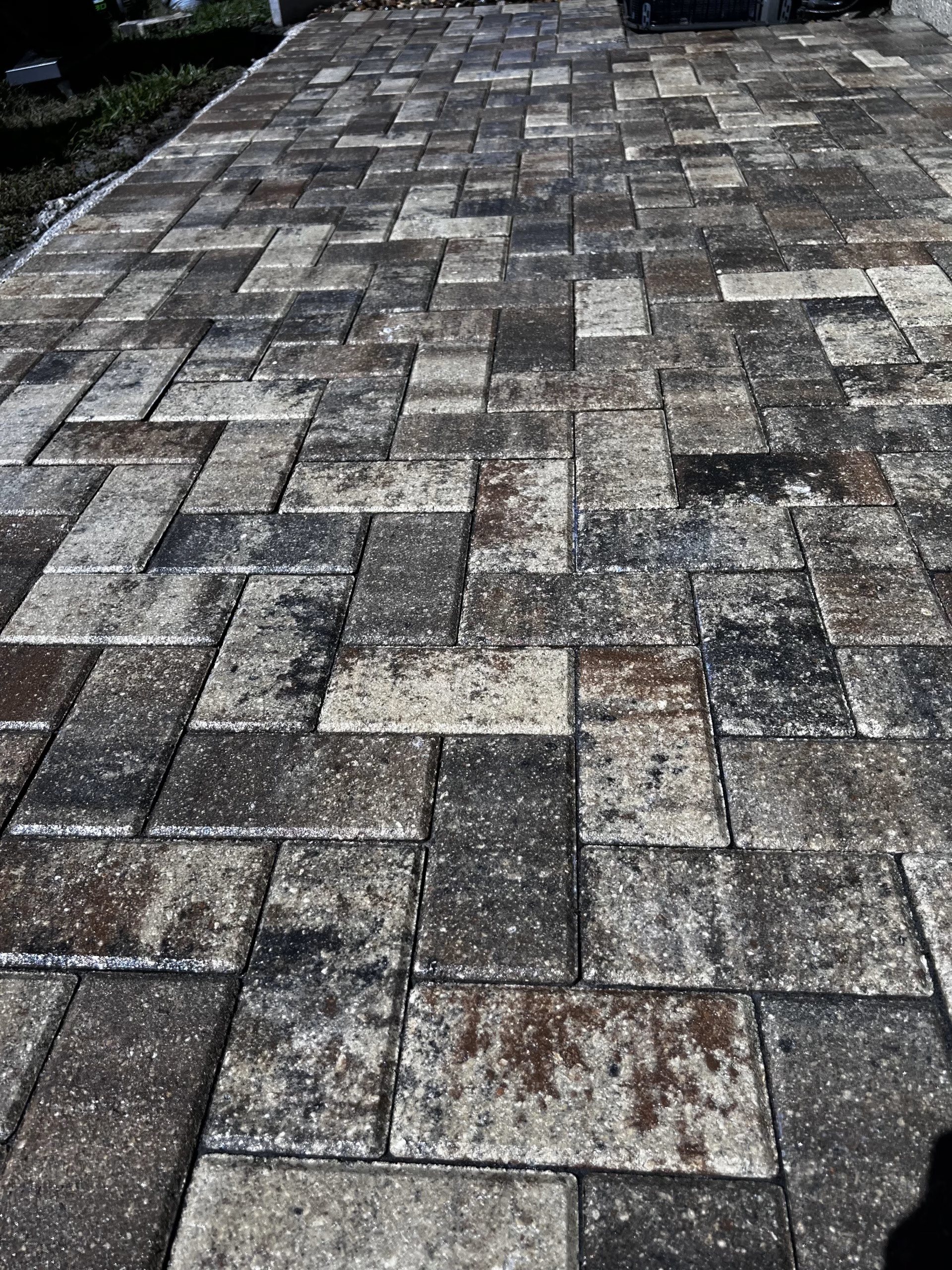
In Palm Harbor’s climate, a quality paver restoration generally holds up for two to four years before another sealing is needed. Several things influence how long it lasts:
-
Sun exposure: Areas in full sun deteriorate faster than shaded sections
-
Foot and vehicle traffic: Driveways wear more quickly than patios
-
Water drainage: Poor drainage keeps moisture trapped against the surface
-
Sprinkler systems: Overspray leaves mineral spots and keeps pavers damp
-
Sealer choice: Absorbing sealers typically outlast surface-coating types
-
Ongoing care: Regular cleaning and quick stain removal extend sealer life
Instead of sealing on a set calendar, watch for warning signs: water that soaks in rather than beading up, colors that look washed out, and more algae appearing. These signal it’s time to reseal. Homeowners who stay on top of exterior maintenance often schedule paver sealing alongside window cleaning and fence cleaning to keep everything on one convenient schedule.
Our Complete Paver Revival Process
Many people think paver restoration is just a fancy name for pressure washing. It’s not. Pressure washing only removes what’s on the surface. True restoration tackles color loss, sand depletion, and protection loss through a proven multi-stage approach. While we use controlled pressure as part of the process, we also offer dedicated pressure washing for driveways, sidewalks, and other concrete surfaces that aren’t part of a paver system.
Stage One: Thorough Cleaning
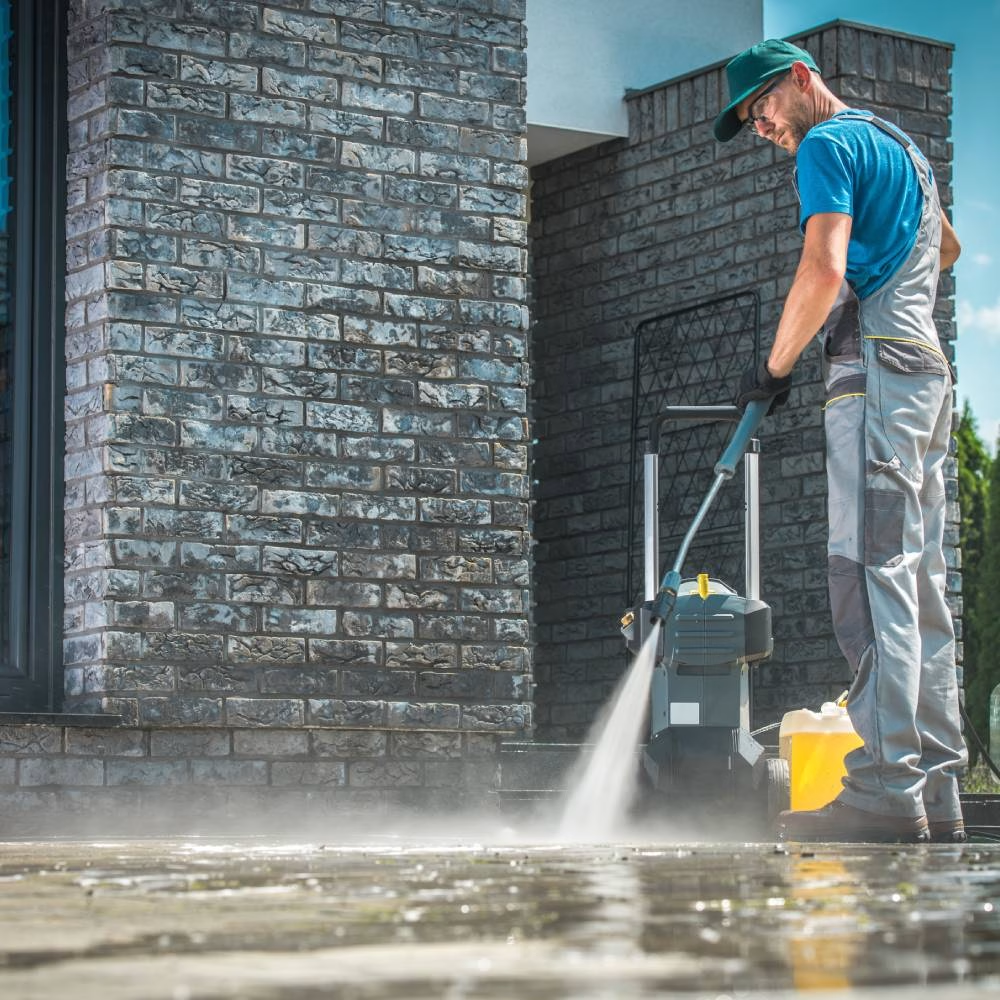
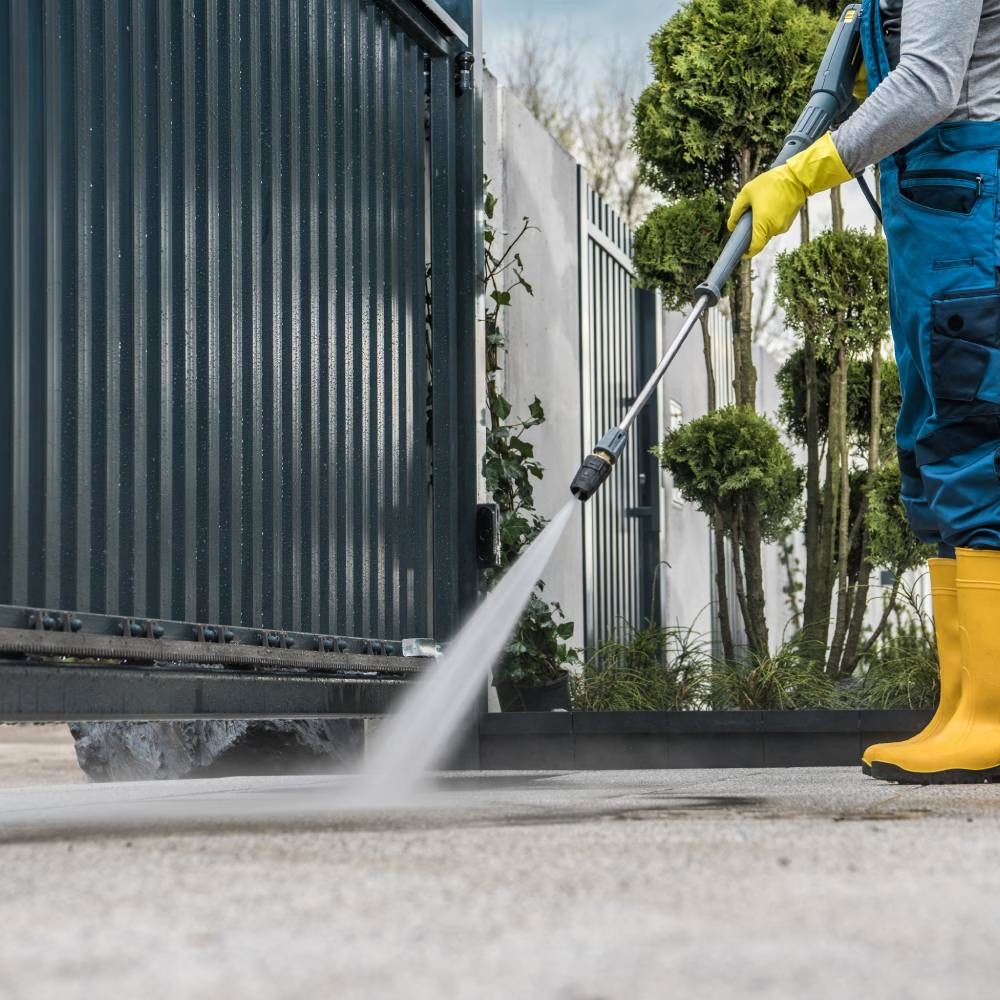
We begin by stripping away everything that’s making your pavers look old — years of dirt, organic growth, and deteriorating sealer. Our team uses carefully calibrated pressure and professional-grade cleaning products that lift grime without harming the paver surface or driving water where it shouldn’t go.
For surfaces with heavy buildup or failed sealer, we use specialized stripping agents and take extra time to ensure complete removal. On properties where dirt and algae have spread beyond the pavers, adding soft washing for the house exterior or roof cleaning for shingles and tiles can bring the whole property back to a consistent, clean look.
Stage Two: Restoring Joint Sand
After cleaning and drying, we refill every joint with fresh polymeric sand. This isn’t ordinary sand — it contains special additives that harden when wet, forming a flexible but sturdy joint that stands up to rain, weeds, and insects.
Getting this right takes patience. We sweep sand into the joints repeatedly to ensure complete filling. Then we carefully clear all excess sand from the paver faces, because leftover residue creates an ugly cloudy film that’s nearly impossible to remove later. This step is the core of our paver sanding and sealing service, and it’s what separates a real restoration from a quick surface rinse.
Stage Three: Applying Protective Sealer
Once the new sand has set, we apply a high-quality sealer. Good sealers do several jobs at once: they hold joint sand in place, block stains from soaking in, slow down UV damage, simplify future cleaning, and can deepen the pavers’ color. You can read more about this step on our dedicated paver sealing page.
We offer two categories of sealer:
Surface-coating sealers form a protective barrier on top of the pavers. They provide outstanding protection and often create a rich, enhanced appearance. They may slightly alter the surface texture.
Absorbing sealers soak into the paver itself, protecting from the inside while preserving the original look and feel. They also make the surface repel water.
Which type is right for you depends on your paver material, age, current condition, and what look you want to achieve.
Paver Materials We Work With in Palm Harbor
Concrete Pavers
The most popular choice in Florida, concrete pavers respond excellently to restoration. Our cleaning process removes organic growth and stains, new joint sand stabilizes the surface, and sealer brings back color and protection. This is the surface type most often handled through our paver restoration and paver sanding and sealing services.
Clay Brick Pavers
Brick pavers made from clay retain their color longer than concrete, but they still need cleaning and sealing. Keeping joint sand maintained is particularly important for brick installations.
Travertine and Other Natural Stone
Natural stone demands a gentler approach. Travertine’s porous surface can be harmed by high-pressure washing or strong chemicals. We tailor our methods to the specific stone type and its condition, and we often recommend paver sealing as the final protective step.
Serving Homes and Businesses Throughout Palm Harbor
Softwash Knights works with both residential and commercial clients in Palm Harbor. For homeowners, we restore driveways, patios, pool decks, walkways, and entryways. For commercial properties — HOAs, apartment communities, and businesses — we handle larger paver areas and work around your operating schedule.
Paver restoration works well alongside our other exterior services, including pressure washing, paver sealing, paver sanding and sealing, pool cage cleaning, and fence cleaning. Bundling services helps your whole property look consistently cared for. Many customers also add roof cleaning, soft washing, and window cleaning to complete the exterior refresh in a single visit.
Local Paver Restoration Services
Softwash Knights provides paver restoration throughout the Tampa Bay area, including:
- Paver Restoration in Odessa Florida
- Paver Restoration in Lutz Florida
- Paver Restoration in Land O’ Lakes Florida
- Paver Restoration in Trinity Florida
- Paver Restoration in Wesley Chapel Florida
- Paver Restoration in Palm Harbor Florida
- Paver Restoration in Tarpon Springs Florida
- Paver Restoration in Holiday Florida
- Paver Restoration in Spring Hill Florida
- Paver Restoration in North Tampa Florida
Frequently Asked Questions About Paver Restoration
How do I know if my pavers need restoration or just cleaning?
If your pavers are simply dirty but the color still looks good and the joints are intact, cleaning may be sufficient. Restoration is appropriate when you notice fading, joint sand loss, weed growth, or the surface no longer repels water. A professional assessment can help you determine which service is right for your situation.
Can faded pavers really be restored, or do I need new pavers?
In most cases, faded pavers can be significantly improved with restoration. Color-enhancing sealers can deepen and refresh the existing color, especially if the pavers still have pigment remaining. If the pavers are completely washed out or structurally failing, restoration may not achieve the results you want — and we’ll tell you that upfront
How long does the restoration process take?
Most residential paver restoration projects take one to two days, depending on the size of the area and the condition of the pavers. The surface must be completely dry before sanding and sealing, and the sealer needs time to cure afterward. We’ll provide a timeline when we assess your project.
What's the difference between polymeric sand and regular sand?
Polymeric sand contains polymer binders that activate with water, creating a firm joint that resists washout, weeds, and insects. Regular sand stays loose and washes out more easily, especially during Florida’s heavy rains. For most permanent paver installations in Florida, polymeric sand is the better choice .
Can you restore pavers that have an old failing sealer on them?
Yes, but the old sealer needs to be stripped first. Applying new sealer over a peeling or failing layer will result in early failure. We assess the existing sealer condition during our evaluation and include stripping in the scope of work if needed.